






Description
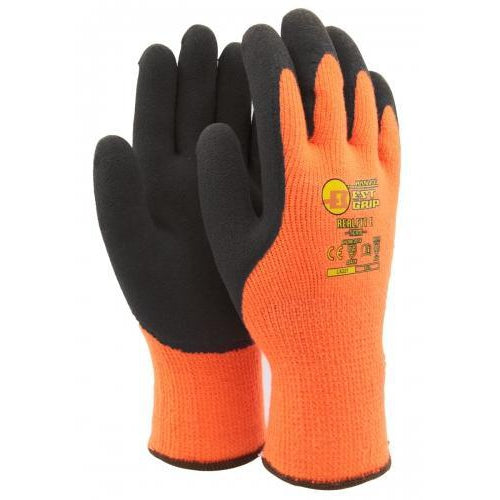
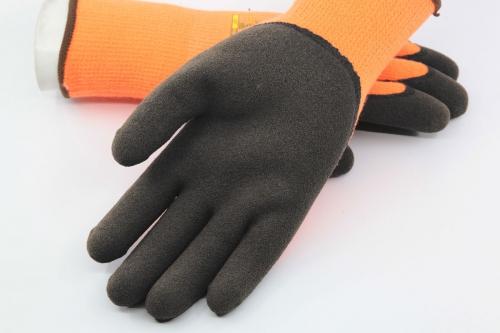
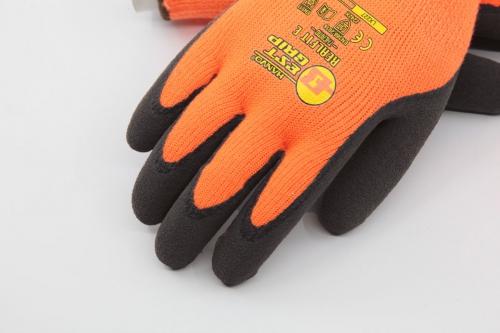
Knitted winter glove in warm and soft acrylic that keeps hands warm in colder environments. Latex coating on the palm and over the fingertips with Sandy Grip technology, which provides an exceptionally good grip in dry, wet, and oily conditions alike. Fully coated thumb for increased insulation and durability.
Product description
Material information
Knitted glove with a latex palm coating and an elastic acrylic liner. The outer layer features Sandy Grip technology.
Material: Acrylic, Latex
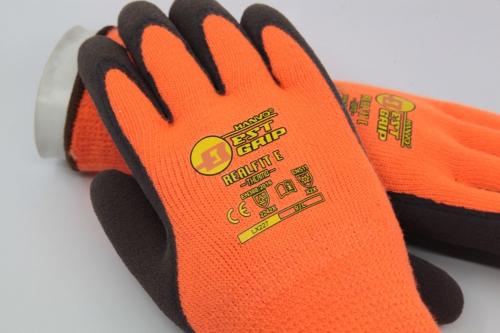
Standard: EN420, EN388:2016, EN511
Properties: Flexible, durable, high-grip
Specifications
Technical facts
According to EN 388:2016 for Category II, up to 6 different properties are measured: abrasion resistance, cut resistance, tear resistance, puncture resistance, extended cut resistance, and impact protection.
A number or letter is then assigned to describe the outcome of the result. The maximum results for each property are: abrasion resistance 4, cut resistance 5, tear resistance 4, puncture resistance 4, extended cut resistance F, and the impact protection test, which receives a P for a pass.
Assess for yourself how important each property is for you as a user. Here is how the pictogram is read:
Abrasion resistance Cut resistance Tear resistance Puncture resistance Extended cut resistance Impact protection test abcdef EN388:2016
 These gloves are made of materials or have a surface treatment that provides an extra good and firm grip. The grip often works in both dry and wet conditions, making work safer. One of the most common causes of glove-related accidents in 2018 was operators losing control of tools due to loss of grip.
 Gloves with a winter lining that provide good thermal properties to keep the user's hands warm in low temperatures. For colder weather or cold storage, the glove must be certified according to EN511:2006. In these cases, it is advantageous to choose gloves that are also wind- and waterproof to increase the degree of insulation.
 Gloves for assembly, workshops, and light industry. These gloves feature properties such as flexibility and fingertip sensitivity. Many assembly gloves today have many smart features, and some are even ergonomically designed for increased comfort. They are not as durable as gloves for heavy-duty work, but their precision is clearly superior.